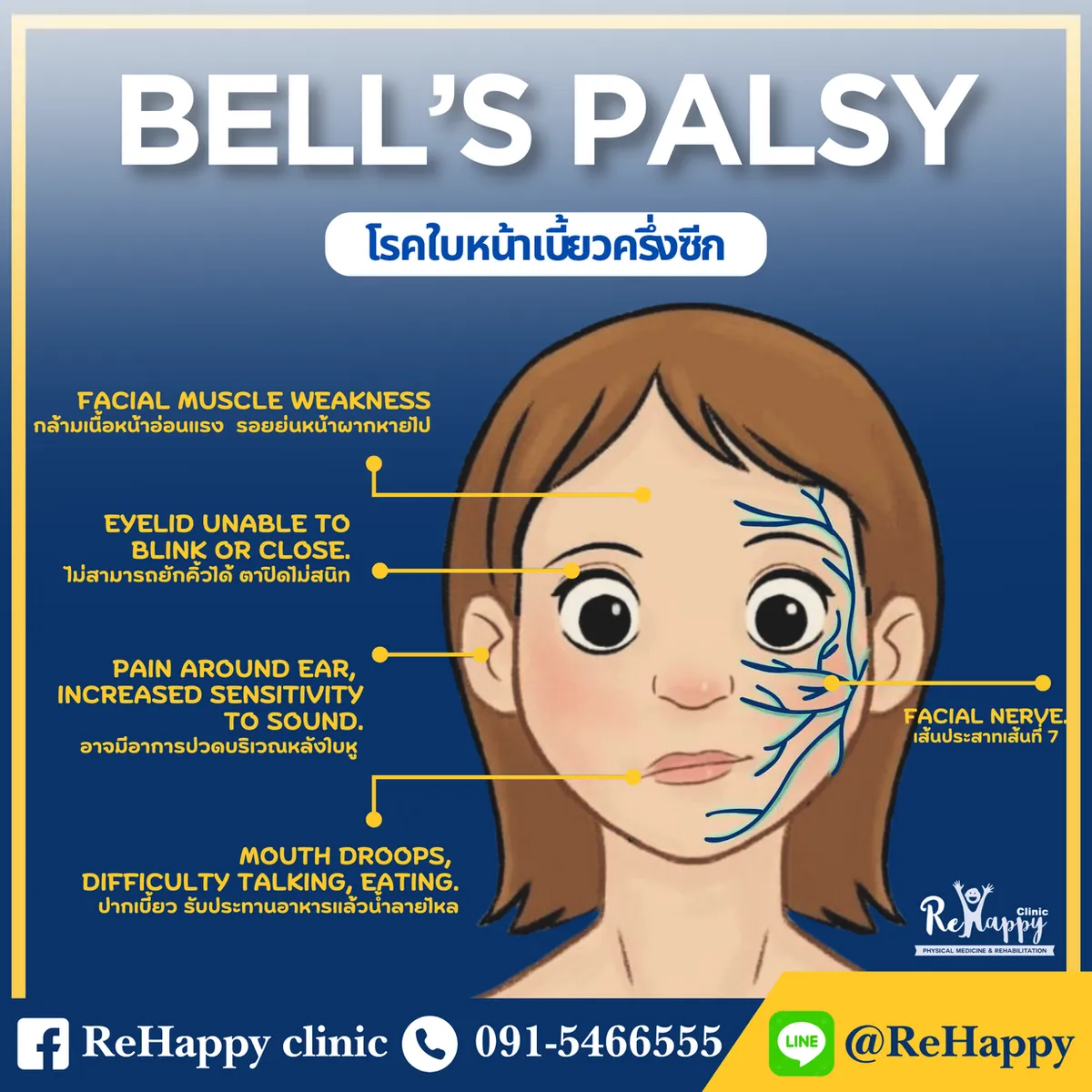
Bell’s palsy causes sudden weakness or paralysis of the muscles on one side of the face, usually without a clear cause. Common signs include an eye that won’t fully close, an uneven smile, or unusual sensations in the face.
Symptoms
- Facial weakness or paralysis, usually on one side, so that side moves less or not at all
- An eye that won’t fully close, which can leave it dry or irritated
- An uneven smile: one side of the face doesn’t follow, or looks lopsided
- Unusual sensations, such as numbness in the face
- Hearing changes: sounds may seem louder, or the ear may feel odd
- Tears and saliva: you may produce more or less than usual
These symptoms usually come on quickly, within hours to a few days.
Treatment
- Steroids such as prednisone reduce inflammation. They usually need to be started within 72 hours of symptoms appearing to work well.
- Physiotherapy helps the facial muscles recover, often with facial exercises.
- Pain relief, such as painkillers or anti-inflammatories, if you’re in pain or discomfort.
- Eye care: if the eye won’t close, eye drops or taping it shut at night help prevent dryness and irritation.
- Treating related symptoms, such as hearing or saliva problems, as needed.
- Close follow-up to track recovery and response to treatment.
In many cases Bell’s palsy improves on its own within 3–6 weeks, but appropriate treatment supports recovery and lowers the risk of complications.
A drooping face can also be a sign of stroke. If you also have weakness in an arm or leg, slurred speech or dizziness, go to hospital immediately.
This page is general information, not a diagnosis or personal treatment advice. If you have symptoms, please see a doctor.